
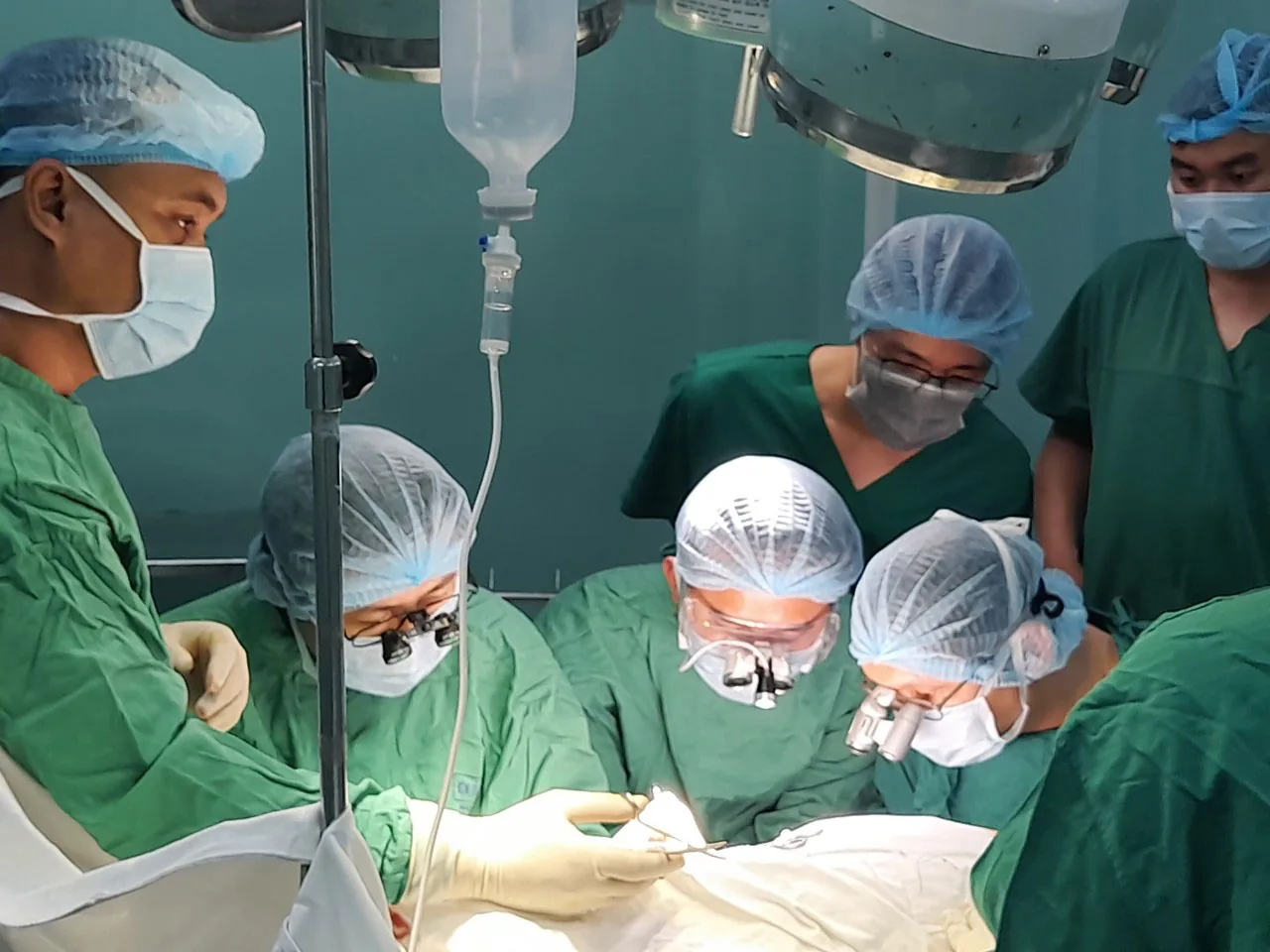
The doctor his colleagues call “Vien of paralysis”
There is a nickname that sounds both strange and warm.
“Vien liet” – Vien of paralysis.
His colleagues call Dr Nguyen Cao Vien this because most of the patients who come to him are paralysed [2].
He is Deputy Head of Orthopaedic Surgery and Head of the Microsurgery and Reconstruction Unit at 115 People’s Hospital [1, 6].
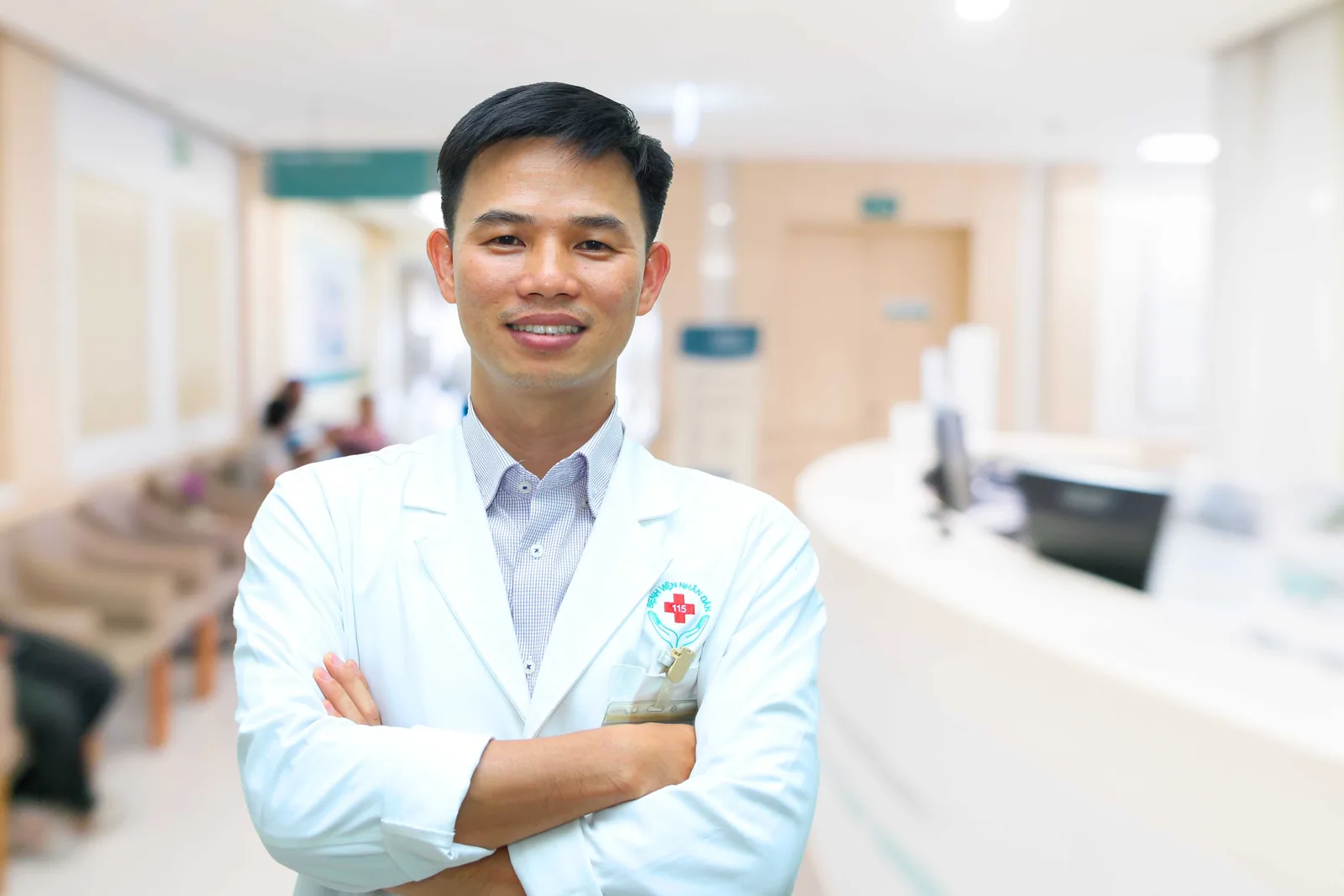
But his road to microsurgery began far from today’s operating rooms.
He comes from a remote district of Dak Lak and studied at Hue University of Medicine and Pharmacy. After graduating in 2003, he moved to Ho Chi Minh City and chose microsurgery [2]. He completed specialist level I in 2014 and level II in 2020 [6].
Along the way there were teachers: Dr Vo Van Toan – his uncle and first guide; Assoc. Prof. Cao Thi; Dr Vo Van Chau; Dr Nguyen Dinh Phu; and Prof. Rene Esser of France [2].
“Dr Vo Van Chau was the first to inspire me to follow this profession” [3].
As he puts it himself:
“A doctor spends 12 years studying, and needs another 5–10 years to master microsurgery” [2].
In microsurgery, time is not only counted in years.
It is counted in hours standing at the operating table. And in functions thought lost that a surgeon patiently tries to call back.
Some smiles wait a long time to return
Dr Vien divides microsurgery into three levels: replantation; reconstruction of defects; and functional microsurgery – where the goal is to give back lost function, as in facial or limb paralysis [4].
“Give back” is a simple phrase.
But some things have been lost for half a lifetime.
A patient with one-sided facial paralysis for 50 years received a gracilis muscle transfer from the thigh to the face, with microsurgical vessel and nerve anastomoses. Afterwards the face was more symmetrical, and the patient could smile again [2].
Fifty years.
Long enough for a smile to seem to belong to a distant part of life.
A 25-year-old woman had half-facial paralysis for almost 14 years, unable to close her eye. After nearly two years of treatment, she could smile again and close her eye in sleep [3].
There, the return of function is more than a muscle movement.
It is the corner of a mouth that can form a smile.
It is an eyelid that can close at the end of the day.
Things so small that most people rarely think about them.
Until the day they are gone.
An arm once still, working the farm with the family again
A 24-year-old man had a completely paralysed arm after a brachial plexus root avulsion in a motorbike accident. After surgery, he was able to help his family on the farm [3].
Nothing grand is told here.
Only a young man using his own arm again to return to his family’s work.
But sometimes the meaning of restored function lies in ordinary things like this.
To get there, each microsurgical operation usually lasts 6 to 8 hours, sometimes more than 10, under loupes or a microscope magnifying about 6 to 20 times [4].
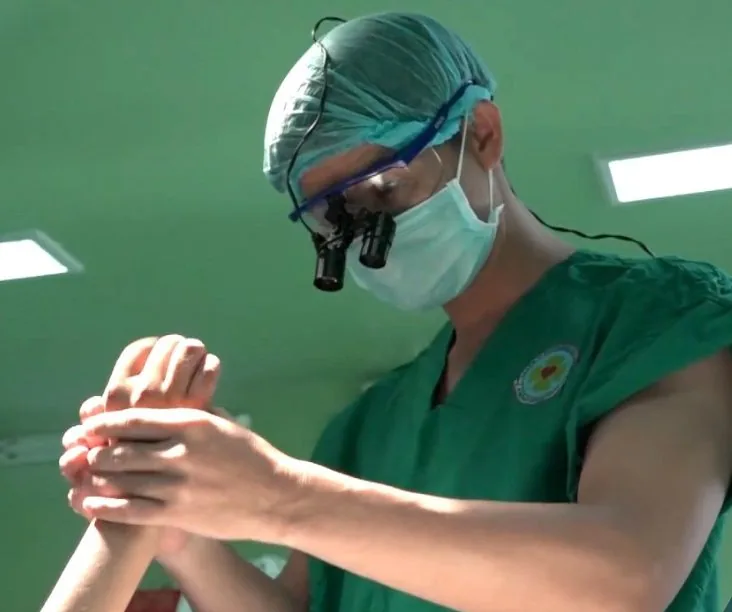
The surgeon’s world shrinks.
Vessels.
Nerves.
Structures that must be magnified many times so that hands can work on the tiniest parts of the body.
After the operation comes time.
Waiting.
Follow-up.
Recovery.
“Over the years, it is patients’ recovery that shows me the work is effective and makes me ready to take on harder cases” [4].
Patients are not only people who receive a technique.
They become part of the surgeon’s own growth.
“Patients are a microsurgeon’s most precious asset” [4].
When lymph needs another way out
Not everything that needs to be given back can be seen, like a smile or a moving arm.
Some flows lie deep inside the body.
According to Dr Vien, about 20–30% of patients develop arm swelling after axillary lymph node dissection or radiotherapy for breast cancer; some suffer repeated cellulitis [2].
Microsurgery offers two routes: vascularised lymph node transfer (VLNT), or supermicrosurgical lymphaticovenular anastomosis (LVA) [1, 2].
115 People’s Hospital performs these techniques routinely and has operated on nearly 200 cases of lymphoedema, together with compression, lymphatic drainage and skin care [1, 2]. In three cases published by the hospital, swelling fell by about 80–90% after 12 to 24 months [1].
In facial paralysis, people wait for a smile to return.
In a paralysed arm, they wait for it to work again.
Here, what must be found again is a way out for the lymph.
Once more, microsurgery enters very small structures.
Not to create something foreign to the body.
But to let a flow move again.
Hands passing the craft to other hands
For Dr Nguyen Cao Vien, microsurgery does not stay in one operating room.
He has transferred techniques to many hospitals: Thong Nhat Dong Nai, Bac Lieu General, Da Nang General, Military Hospitals 175 and 17, Nghe An Orthopaedic Hospital, Vietnam–Cuba Friendship Hospital in Dong Hoi, Khanh Hoa General and more [2].
The microsurgery exchange group he connects has about 1,900 doctors and health workers. He hopes every hospital will have one or two microsurgeons [4].
“Every microsurgeon becomes an expert for the others” [4].
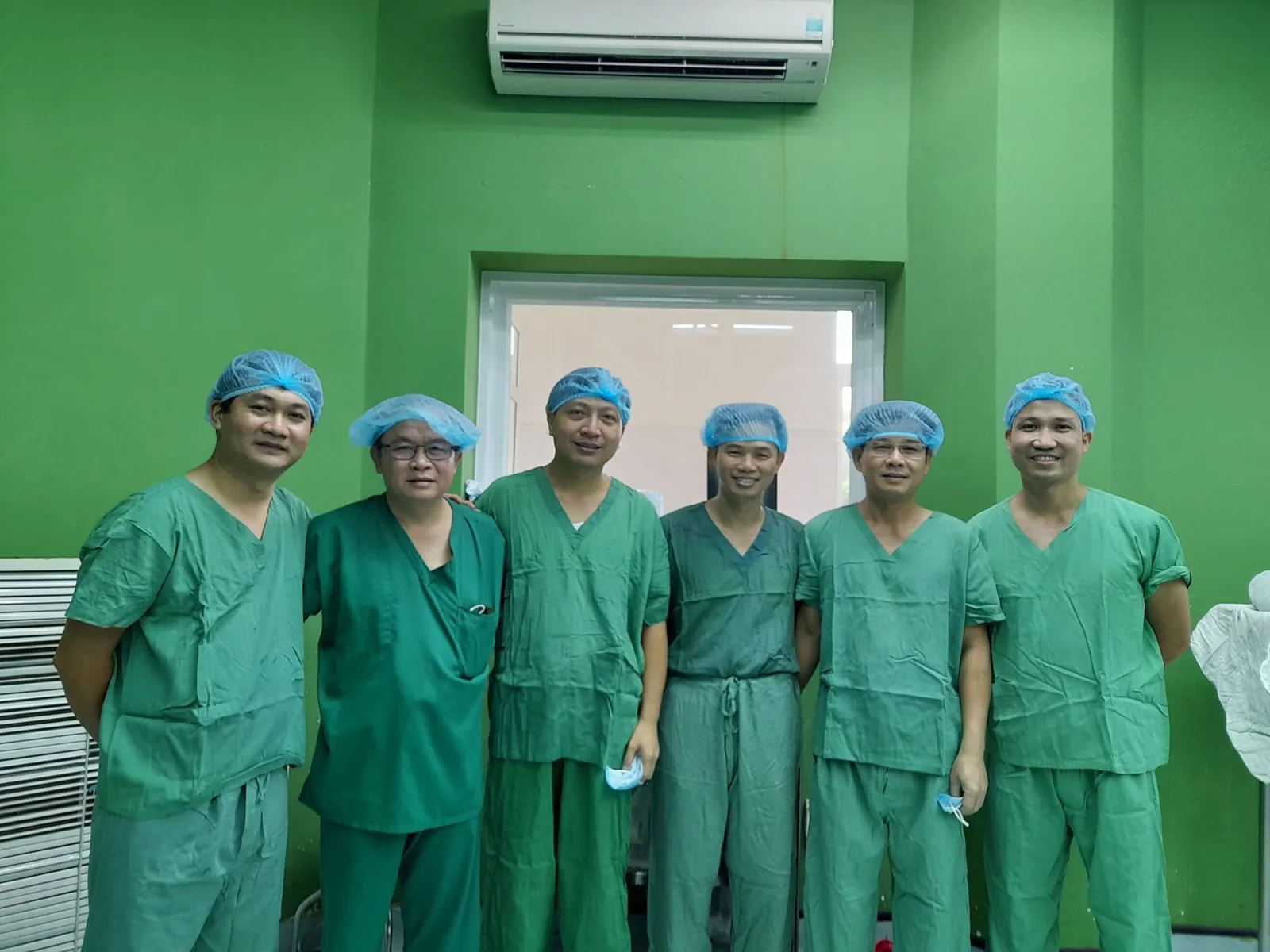
That is another way to understand “giving back”.
Not only giving a patient back a smile, an arm, a flow.
But passing on what he has learned, so that in another operating room, another hospital, there will be more hands able to work on tiny vessels and nerves.
Then one day, before the surgeon stands another person who has lived for years with what they lost.
Under the microscope, everything begins with very small structures.
But when function returns, what is given back has never been that small.
It is a smile.
Eyes that close in sleep.
An arm working beside the family.
And the surgeon’s craft is told simply, through the things once lost – and, little by little, helped to find their way back.
References
- Bệnh viện Nhân dân 115. Thành tựu trong điều trị phù bạch mạch tại Bệnh viện Nhân dân 115. 27/02/2025. benhviennhandan115.com/blogs/thanh-tuu-noi-bat/thanh
- Nguyễn Thạnh. Những bàn tay vàng của ngành y: “Cứu tinh” cho người liệt. Báo Người Lao Động, 25/02/2023. nld.com.vn/suc-khoe/nhung-ban-tay-vang-cua-nganh-y-c
- Lê Vân. Cứu tinh của người bị liệt. Báo Tuổi Trẻ, 13/08/2018. tuoitre.vn/cuu-tinh-cua-nguoi-bi-liet-20180813110814
- BS.CK2 Nguyễn Cao Viễn: Chuyên gia vi phẫu Bệnh viện Nhân dân 115. Blouse Trắng Vì Cộng Đồng, 16/05/2024. blousetrangvicongdong.vn/bs-ck2-nguyen-cao-vien-chuy
- Bệnh viện Nhân dân 115. BS.CK1 Nguyễn Cao Viễn: Liệt đám rối thần kinh cánh tay có phục hồi được không? 11/07/2019. benhviennhandan115.com/blogs/tin-tuc-hoat-dong/bs-ck
- AloBacsi. Hồ sơ BS.CK2 Nguyễn Cao Viễn. alobacsi.com/bac-si/bs-ck2-nguyen-cao-vien.html