
A smoke that does not come from fire
On a cerebral angiogram, there is a distinctive picture.
Small, fine vessels woven together. They appear like smoke spreading through the brain.
But it is not smoke.
Moyamoya is a rare cerebrovascular disease in which the terminal internal carotid artery and its proximal branches gradually narrow. As the main road for blood tightens, a network of small collateral vessels forms. On the angiogram it looks like a puff of smoke – “moyamoya” in Japanese [2].
In 1969, Suzuki and Takaku named the disease after that very image [3].
A name as light as smoke.
But behind it is the story of blood struggling to find its way to the brain.
And the question for the surgeon becomes very clear: if the natural road is narrowing, can another road be opened for the blood?
A new road joined by a surgeon’s hands
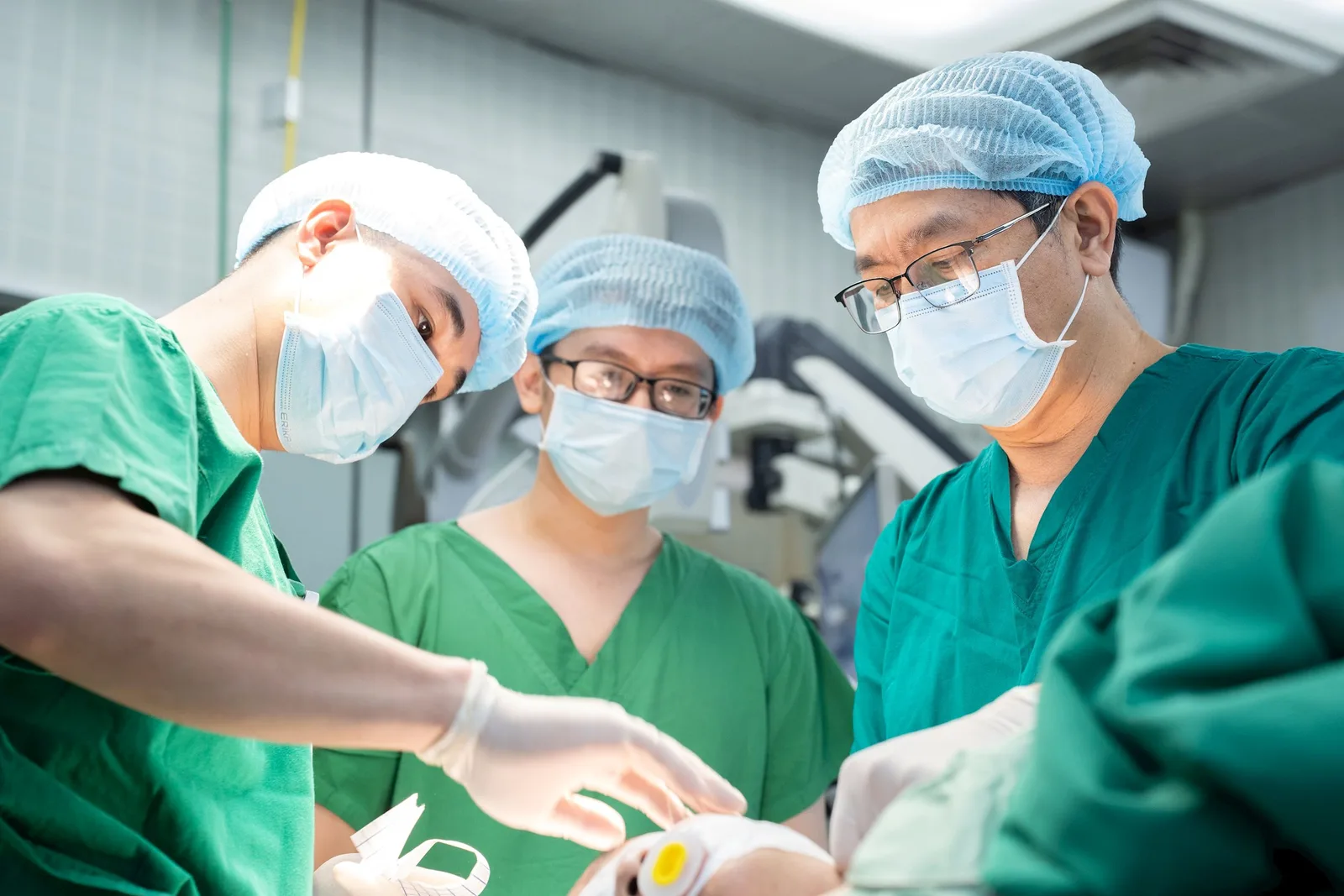
For Dr Tran Minh Tri, Deputy Head of Neurosurgery at Cho Ray Hospital, the answer lies in a technique that demands great precision.
“The most important requirement is surgery to join the intracranial and extracranial vessels” [4].
From outside the skull to inside it.
From one vessel to another.
A new road, so that blood has another way to reach the part of the brain that needs it.
The aim of the operation, as Dr Tri explains, is “to restore blood flow to the affected area of the brain and save brain cells that have not yet died” [4].
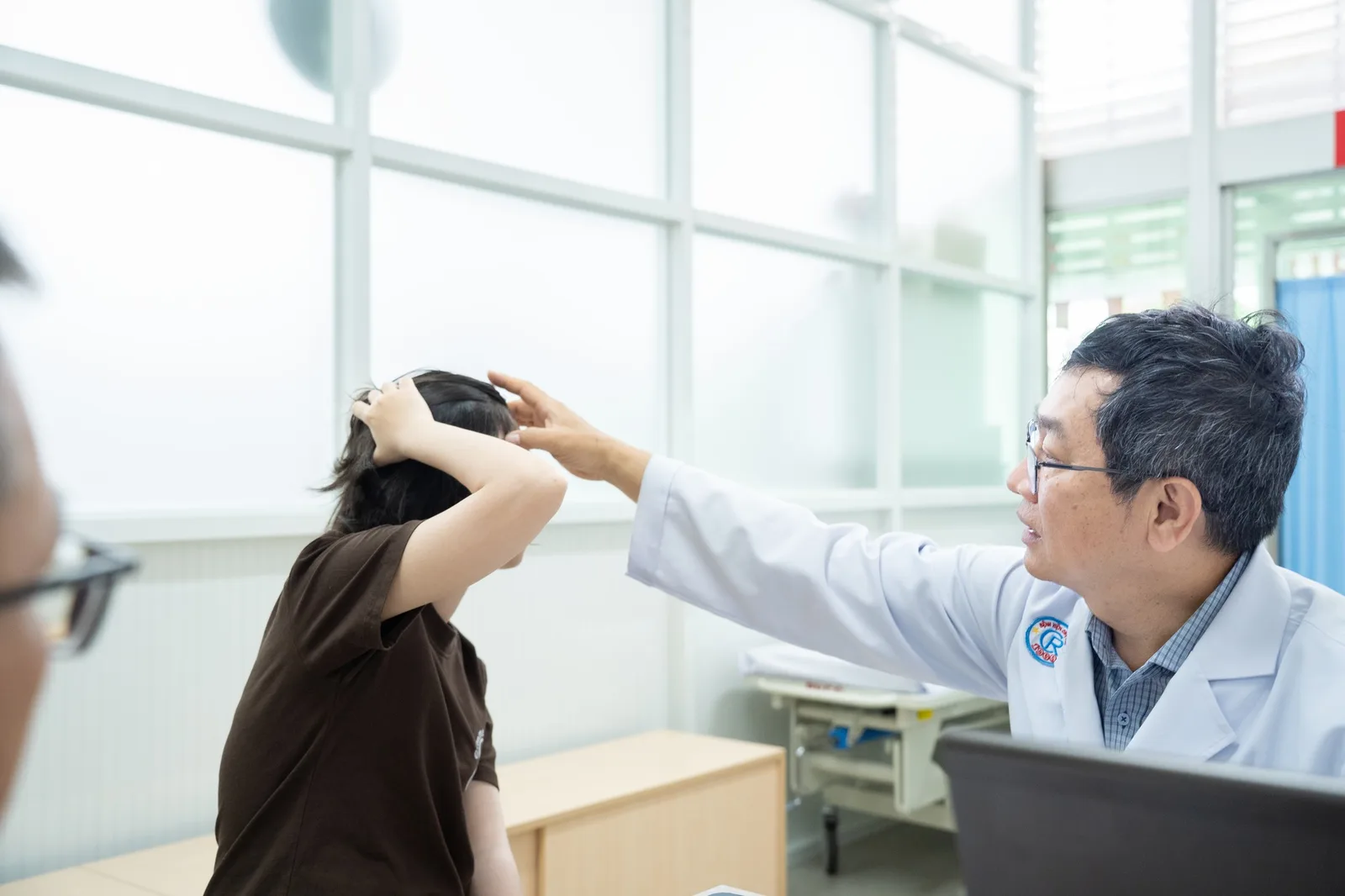
In 2013, Dr Tran Minh Tri reported a series of 12 adult moyamoya patients, mean age 39.6, who underwent cerebral bypass at Cho Ray Hospital in 2008–2012. All received direct bypass; mean follow-up was 1.8 years, and no surgical complications or deaths were recorded in this series [1].
Those are the numbers of a scientific report.
But behind them is a journey to find blood a new road, begun many years ago.
And still going on.
Eighteen years beside small streams of blood
According to Dr Tran Huy Hoan Bao, Head of Neurosurgery, after 18 years of routine bypass surgery the department has treated more than 600 moyamoya cases [4].
More than six hundred times, a disease shaped like smoke has entered the story of these surgeons.
More than six hundred times, behind the image of the vessels, there was a person.
In Vietnam, STA–MCA bypass for moyamoya has also been studied by other surgical teams and published in international journals [5].
Every case may be different, but the logic of blood stays the same.
Where a road is missing, the surgeon opens another.
Where the brain lacks blood, the aim is to bring blood there.
That road is so small the work has to be done under the surgical microscope.
And then, one day, the surgeon did not only open the new road.
They could see the blood flowing through it.
When the blood lights up in the operating room
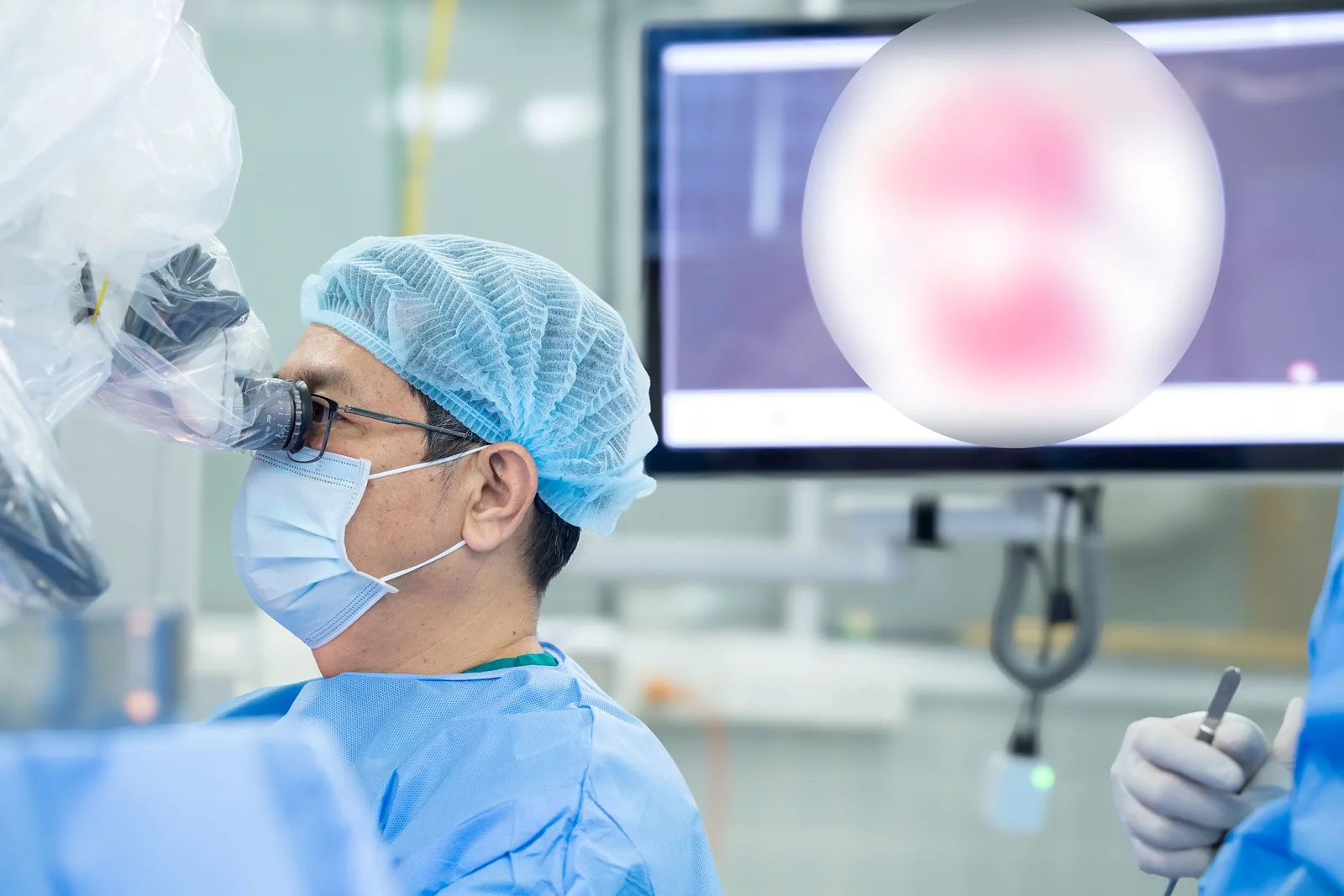
Since mid-2025, Cho Ray Hospital has used a surgical microscope with integrated ICG fluorescence angiography [4].
During the operation, ICG is used twice.
The first time, to choose the cortical vessel for the bypass.
After the anastomosis, the second time, to check during the operation whether the bypass is open [4].
It is a special moment.
Before the surgeon’s eyes, blood that is invisible to the naked eye appears in fluorescent light.
The new road no longer has to wait to be judged later.
Right at the operating table, the surgeon can see the flow through the bypass.
One vessel end.
One anastomosis.
One stream of blood.
And on the other side of that stream, brain tissue waiting to be fed.
If moyamoya on the angiogram suggests smoke, then in the operating room fluorescence gives the surgeon another picture: blood flowing along the road they have just opened.
After the smoke, a hand moves again
In March 2026, the press told the story of a 20-year-old woman from Can Tho.
She had long-lasting headaches, facial palsy and weakness on the left side. Perfusion MRI and digital subtraction angiography showed moyamoya disease. She underwent extracranial–intracranial bypass in the Neurosurgery Department of Cho Ray Hospital [4].
In a disease named after smoke, what the patient faced was very real.
Half of the face paralysed.
Half of the body weakened.
A hand that no longer moved as before.
After surgery she could move her left arm again. A day later, proximal muscle strength was almost normal and the facial palsy had improved. A week later, she went home [4].
The stories of neurosurgery are often told through very small things.
A vessel.
An anastomosis.
A fluorescent signal.
A hand beginning to move again.
Yet these small things sit between the largest parts of a human life.
The smoke is still there on the angiogram, a trace of natural roads slowly closing.
Under the microscope, surgeons open another road.
They join the vessels.
The blood flows through.
And what waits on the other side has never been only an open bypass. It is brain tissue fed with blood, a hand that can move, and a patient walking out of hospital into the rest of their life.
References
- Trần Minh Trí. Phẫu thuật bắt cầu động mạch não trong bệnh lý Moyamoya (EC-IC bypass). Tạp chí Y học TP. Hồ Chí Minh. 2013;17(1 Phụ bản):248–252. tapchiyhoctphcm.vn/articles/11948
- Scott RM, Smith ER. Moyamoya disease and moyamoya syndrome. N Engl J Med. 2009;360(12):1226–1237. doi:10.1056/NEJMra0804622 doi.org/10.1056/NEJMra0804622
- Suzuki J, Takaku A. Cerebrovascular “moyamoya” disease: disease showing abnormal net-like vessels in base of brain. Arch Neurol. 1969;20(3):288–299. doi:10.1001/archneur.1969.00480090076012 doi.org/10.1001/archneur.1969.00480090076012
- Tuổi Trẻ. Sau phẫu thuật bắc cầu động mạch não, phụ nữ trẻ bị liệt do bệnh Moyamoya hồi phục. 11/03/2026. tuoitre.vn/khoahocphothong/sau-phau-thuat-bac-cau-do
- Nguyen AM, Huynh NT, Nguyen HV. Superficial temporal artery–middle cerebral artery bypass for moyamoya disease treatment in Vietnam: a single-center prospective study. Interdisciplinary Neurosurgery. 2022;29:101575. doi:10.1016/j.inat.2022.101575 doi.org/10.1016/j.inat.2022.101575
- VnEconomy. Moyamoya – hội chứng nguy hiểm ít được biết đến. 2026. vneconomy.vn/moyamoya-hoi-chung-nguy-hiem-it-duoc-bi