
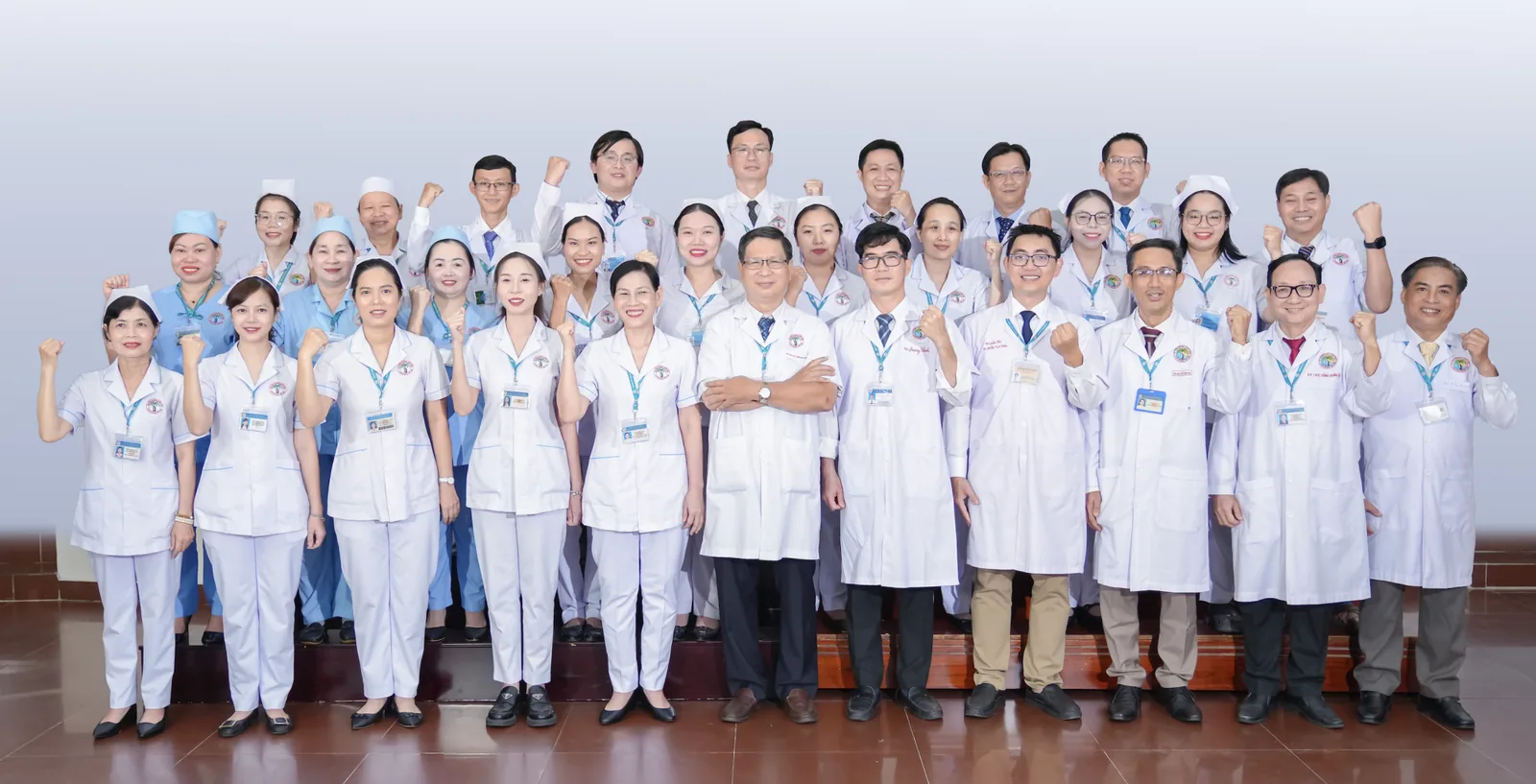
When a surgeon must see the very small
In microsurgery, surgeons work on very small blood vessels and nerves under the operating microscope. Those sutures make it possible to replant amputated limbs, transfer free tissue flaps and reconstruct complex defects.
In Vietnam, that story did not begin with everything in place.
Professor Nguyen Huy Phan at 108 Military Central Hospital began researching microsurgery in 1980, when much of the equipment it needed was still lacking [1]. According to press reports, just a year later, in 1981, he successfully performed microsurgery on a patient whose hand had been severed by a paper-cutting machine [2].
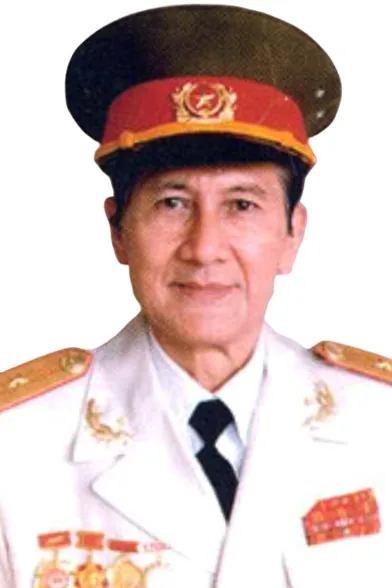
A severed hand makes a very concrete demand: every small vessel and every nerve must be found and joined again. Through cases like this, microsurgery gradually found its place in Vietnamese surgery.
Starting before the tools were there
In the South, the story took a different path, but under the same scarcity.
In the 1980s, Dr Vo Van Chau and a group of surgeons at the Hospital for Traumatology and Orthopaedics in Ho Chi Minh City taught themselves microsurgery. With instruments unavailable, they made their own needles, sutures and some of their tools for practice [3].
Before training laboratories and structured partnerships existed, there were people who began with whatever they had. In a field that demands great precision, a lack of instruments is a real limit. Yet it was within that limit that the first foundations were laid.
When doors began to open
The turning point came through training and international collaboration.
From 1991, a team of American surgeons led by Dr Craig Merrell taught microsurgery at 108 Hospital together with Professor Nguyen Huy Phan [1]. A 2007 paper in Plastic and Reconstructive Surgery reviewed 15 years of the programme: 11 missions and 108 free tissue transfers. Over time, Vietnamese surgeons performed the techniques themselves, set up a microsurgery unit and took part in teaching [4].
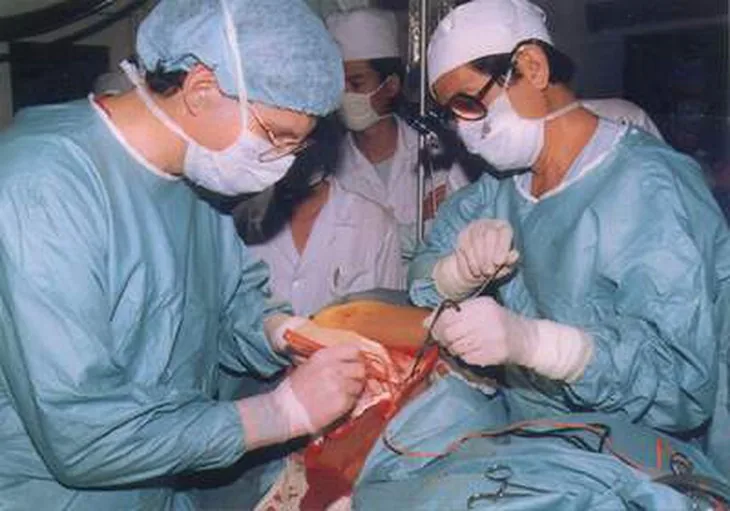
What stays with us is not only the number of operations. Knowledge was passed on and kept: those who learned became those who could operate, and then those who taught. From 2002, 108 Hospital extended its collaboration to Professor Fu-Chan Wei and Chang Gung Memorial Hospital in Taiwan [1].
In the South, a training foundation was being built at the same time. The Hospital for Traumatology and Orthopaedics in Ho Chi Minh City opened its Microsurgery Unit in 1991, its microsurgery laboratory in 1994 and its Department of Microsurgery and Plastic Surgery in 1997. By 2013, the laboratory had run 27 courses for 321 trainees from 34 provinces and cities [3].
When Vietnamese experience reached the world’s literature
Over time, what had been learned in Vietnamese operating rooms began to appear in international journals.
108 Hospital published a series of 5 hand replantations at the wrist joint in 2006 [5]. Another report described 10 forearm replantations after avulsion amputation between 1999 and 2006; all 10 replanted limbs survived [6]. In 2020, the hospital reported a forearm-and-hand transplant from a living donor [7].
Looking back, it is one long thread across several decades: from research with too little equipment, to training partnerships, to specialist units, to experience shared with the world. It is not the story of one moment, but the result of steady accumulation and continuity.
And the stitches are still being passed on
Today, microsurgery is performed in many hospitals across the country, in orthopaedic trauma, hand surgery, plastic surgery and maxillofacial surgery. It still requires properly trained surgeons, an operating microscope, microsurgical instruments and suitable sutures.
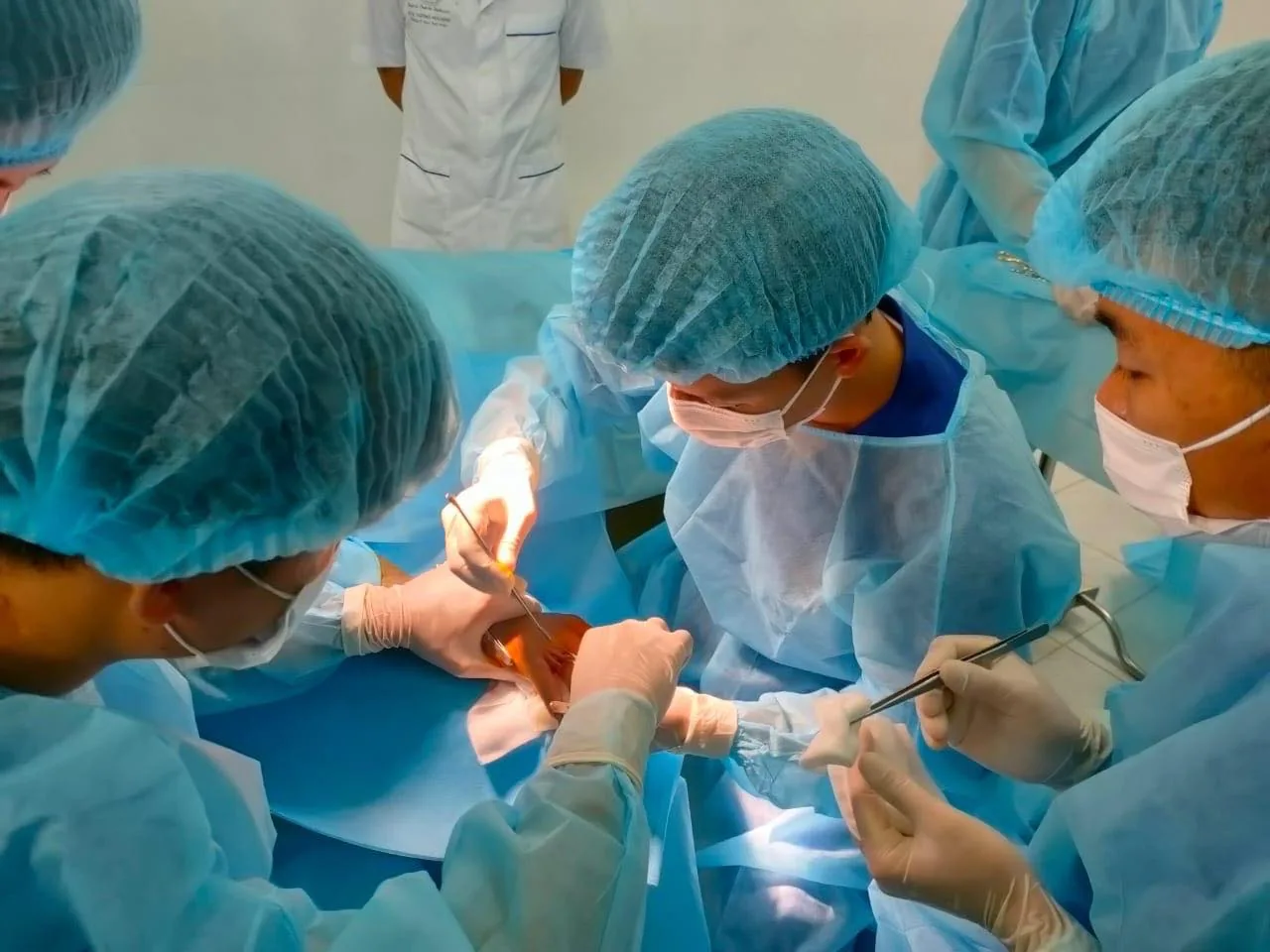
That is why training remains part of the journey. Basic courses in microsurgery and plastic surgery continue to be held, with laboratory and animal-model practice aimed at suturing vessels of about 1 mm and peripheral nerves [8].
From those who once taught themselves and made their own needles and sutures, to today’s surgeons practising stitch by stitch at the microscope, Vietnamese microsurgery carries on through what defines the field itself: precision, patience and skills handed down from one generation to the next.
MGI Medical honours this journey and the generations of doctors who laid the foundations of microsurgery in Vietnam. We take part by supplying microsurgical instruments and sutures, a small part of a journey that continues.
References
- Bệnh viện TWQĐ 108. Thế giới công nhận thành tựu của vi phẫu Việt Nam, 26/3/2014. benhvien108.vn/the-gioi-cong-nhan-thanh-tuu-cua-vi-p
- Hà Quyên. Nối liền bộ phận bị đứt lìa – kỹ thuật vi phẫu đỉnh cao. Zing News, 25/5/2015. lifestyle.zingnews.vn/noi-lien-bo-phan-bi-dut-lia-ky
- Mai Trọng Tường. Sự hình thành và phát triển mạng lưới Vi phẫu ở các tỉnh phía Nam. Hội Y học TP.HCM, 23/11/2013. hoiyhoctphcm.org.vn/wp-content/uploads/Data/picture/
- Merrell JC, et al. Introduction of microsurgery in Vietnam by a charitable organization: a 15-year experience. Plast Reconstr Surg. 2007;119(4):1267-1273. pubmed.ncbi.nlm.nih.gov/17496600/
- Hoang NT. Hand replantations following complete amputations at the wrist joint: first experiences in Hanoi, Vietnam. J Hand Surg Br. 2006;31(1):9-17. pubmed.ncbi.nlm.nih.gov/16359762/
- The Hoang N, Hai LH, Staudenmaier R, Hoehnke C. J Trauma. 2009;66(4):1167-1172. pubmed.ncbi.nlm.nih.gov/19359932/
- Người Lao Động, 24/02/2020: ca ghép chi thể từ người hiến sống tại BV TWQĐ 108. tuoitre.vn/nld/suc-khoe/viet-nam-thuc-hien-thanh-con
- BV Chấn thương Chỉnh hình TP.HCM. Chiêu sinh lớp Vi phẫu Tạo hình căn bản năm 2023, 24/8/2023. benhvienchanthuongchinhhinh.vn/vn/chieu-sinh-lop-vi-